

Tutorials

CryptoLibrary: Securely Storing Credentials in Robot Code

How to protect sensitive data in your Robot Framework tests using the CryptoLibrary.

Simon Meggle

If you’re doing synthetic monitoring with Robotmk in the Checkmk environment, sooner or later you’ll encounter this one question: how do I prevent passwords from ever appearing in plain text?

This article describes how to use the CryptoLibrary to protect sensitive data in Robot Framework tests.
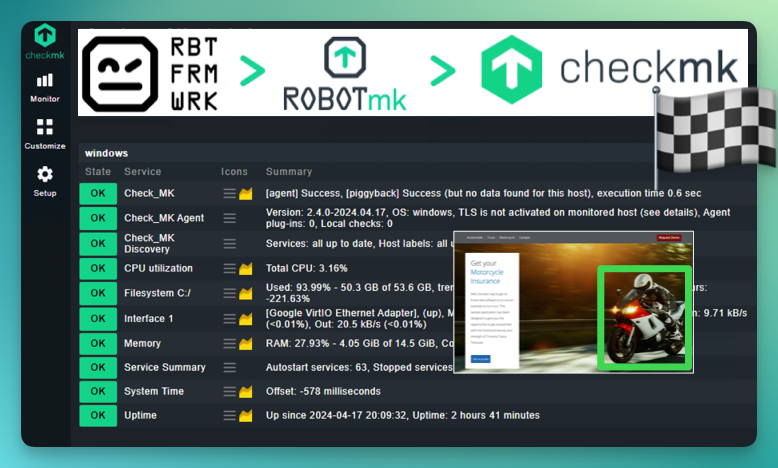
Robotmk and RCC-Environments in air-gapped environments

How to prepare RCC environments and transfer them to isolated test hosts via ZIP archive.

Simon Meggle

RCC was one of the game changers with the introduction of Robotmk V2 - it takes care of the entire lifecycle of the Python environments that Robot Framework needs.

That’s super convenient, but there’s a catch: RCC assumes that the test host has access to the internet to download the required packages. This article describes a very practical way to use it in isolated environments.

Robotmk v2 quick start

Integrate the first RobotFramework test with Robotmk v2 in Checkmk step by step.

Simon Meggle

The step-by-step guide updated for Checkmk 2.4 for a successful start with synthetic monitoring using Robotmk!

RCC Troubleshooting

Simon Meggle

RCC is the command line tool used to build Python environments for the Robotmk Framework. The practical advantage of this is that it can be used both during test development and during execution by Robotmk. This ensures that the scripts always run in a reliable environment.

However, errors can sometimes occur when building or activating the environments.
This article summarizes the most common sources of errors when working with RCC and shows how to fix them efficiently.